
Transcript
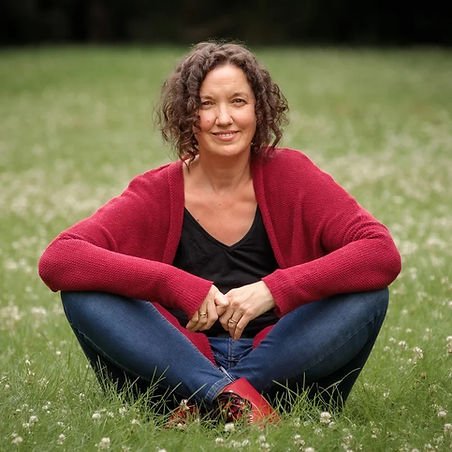
The God Who Plays with Katy Bowser Hutson
Episode 86
Introduction:
Welcome to the Loved Called Gifted Podcast. This is your place to come for musings about spirituality, identity and purpose. I'm your host, Catherine Cowell.
Catherine:
So I'm really chuffed to be joined by Katy Bowser Hutson for this episode of the Loved Called Gifted Podcast. So thank you so much for joining us, Katy. I'm so glad to be with you, Catherine. So rather excitingly, you're in Nashville.
Katy:
I guess it is. It's often exciting here. I mean we're doing workaday things and raising children and writing stuff and doing what we do. Hey, I like it. So how long have you lived in Nashville? Oh goodness. My whole adult life. I was an army brat, so I grew up in Washington DC and Germany and Georgia and I mean various places, New Orleans But um I went to school here and then I stuck around. Yeah, that's been almost thirty years. I'm almost fifty. I'm almost forty nine, which is almost fifty.
Catherine:
Does this mean you have exciting plans for when you are fifty?
Katy:
I'm going to put out a book. My exciting plan is to finish this book that I'm writing. I take it this is the playbook. Yes, I think we might just leave it at that title. I just like playbook. When we do that title search, there's only one of their out there, so it's the playbook. Excellent.
Catherine:
So the reason I was really excited to talk to you was that I did a podcast with Sophie Killingley l recently and she mentioned that she was working on this with you. And play is something that I think is just so precious. An overlooked spiritual practice, if you want to make it sound more serious than it needs to be, And an absolute stake in the ground for considering the importance of being rather than doing.
Katy:
Oh, I love that. Yes. There's a wonderful phrase by Johan Heusinger, who is one of the real like groundbreaking thinkers of play. He was a Dutch historian. He has a wonderful phrase that play is of a higher order than seriousness. So when you threw in serious there, I couldn't help thinking about it.
Catherine:
So what got you interested in play in the first place?
Katy:
Oh goodness, that's a great question. Well, I think I've always had a playful bent towards things. Being a woman of a certain age and looking back. It took me a long time to figure out that ADHD was in the mix. So I feel like I've always noticed lots of things around me. I'm a poet. So I see things and notice things and look at things closely. And I've been following Jesus since I was twelve And I feel like God played his way into that with me. That didn't come about in a way that I expected. I felt little things here and there and saw little things that looked like God at play. But as an adult, I have been a writer and a songwriter, and I have written songs for children and adults and wrote poetry And I think I've just always had a playful bent towards that. And so I feel like what happened is that I started to follow these breadcrumbs and these trails of the things that made me feel alive. And it felt like one of the big themes is that the world is at play, that God is at play in the world. So to just kind of jump to the genesis of this project, when I was 40 I had cancer Which is not a playful thing per se. But at the bottom of that, I still felt God at play with me. And all of these things that I thought and explored about play kind of came to a head. And I started to go, what are the qualities of play? What is it that makes play play? Because it doesn't just happen when I'm happy or delighted. play feels curious and interested and vulnerable and relational and I started putting that together and trying to go on that treasure hunt. Hence the book
Catherine:
You were talking about sort of encountering Jesus at about the age of twelve and encountering God through play. And I wondered if you would like to tell us a little bit more about what that was like and what was going on for you.
Katy:
Yeah, you know I wrote a poem in the book I have a I wrote a poem about encountering the the Trinity as a child. Are you familiar with Ignatius of Loyola? I am, yes. Okay. Because I think it is one of the most play laden spiritual practices, the way that Ignatius enters stories, enters prayer with wondering and curiosity, and entering a story of of scripture and I I love it so much. When I ran into what I thought, oh, this is play.
Catherine:
These are all the fingerprints, the hallmarks of play, and I loved that. So for those people who aren't familiar with Ignatius, so one of the things that he invites people to do is to read a story from Scripture, often a story from the life of Jesus. And then you imagine yourself in the story. And you imagine it. It's almost like setting a video rolling, that you would put yourself as a character in the story or possibly as an observer. and just kind of see how it plays out. And it's really interesting, Katy, because until you said that, I'd never connected that with play. Oh, really? Really? Yeah, but of course it's it's it's make believe.
Katy:
It's make believe play, isn't it? It is, yes. It's putting yourself in a true story. and putting yourself either as a fly on the on the wall or having the the empathy and the imagination of putting yourself in the place of a character. And going, I wonder what that was like. So there are things that we can't know, but there are things that we do know about being human. If I were in this situation and I were a shepherd at the birth of Jesus What would it be like to be a shepherd? To be a worker? What would it be like to be in this room with angels? There's a million wondering questions. I had talked to a friend when I was thinking about all of the things we don't know in Scripture, and he came up with the most wonderful phrase, my friend Father Jonathan Warren. He's like, you know, there's so many things we can't know, but they're still worthy of consideration. And that hit so much to me There's so many things we can't know, but the spiritual practice of entering those and and just and playing with them. I think that's what God gave us our God-given imagination for.
Catherine:
Yes, and one of the things about what Ignatius was encouraging people to do is that you don't have to stick to the script. So you can imagine If your imagination with the Holy Spirit goes in a different direction, then the encouragement is just to go with it.
Katy:
Yes. And go explore that. So when it comes to that as a child, I learned a few years ago about a colloquy, which is sitting down with your good friend Jesus and telling him about your day and just having a chat with Jesus, right? The idea that God is for you and loves you and prayer is just sitting down with your friend Jesus and telling him about things. It's called a colloquy. And I learned about a triple colloquy Which was fascinating too, because a triple colloquy is sitting with each of the three persons of the Trinity and talking to each of them. What feels different about having a chat with God the Father and God the Son and God the Holy Spirit? So when it comes to that, when it comes to me meeting God as a child, I wrote a poem thinking, how did I meet the Father, the Son, and the Holy Spirit as a child? Where did I first encounter each of those? And I remember living in Germany, walking behind military housing, and between everybody's houses, I remember that people had their sheets out drying on the line and that they were blowing in the wind. And I remember the distinct feeling of not being alone in the middle of that. And it felt like God at play It felt like is there somebody hiding there? I felt a good nearness. And there's something so playful about that. It felt like hide and seek. And I felt not alone before I could ever put words to who the Holy Spirit was. So when I started to learn more through scripture and older, wiser people, I went, oh, that's who that is. That is God the Holy Spirit who has forever been close and whispering, for example. But I think God does that so often, is that play with us, whispering, talking in in a million ways before we ever know the words of of who that is.
Catherine:
Yeah. Yeah. That takes away some of the weight that can be attached to spirituality and spiritual practice, doesn't it? It gives it a lightness. Yeah. And an access to feeling accepted by the divine. Because One of the things about play is that we play with people we like. So we can believe that God loves us, but if we think God is playing with us, then that takes us into a different space of of understanding ourselves as liked. and seen affectionately and with delight, doesn't it?
Katy:
Yes, I love that. And that that's one of those hallmarks of play that is so helpful. Um it is really hard to play with someone if you don't think they like you. You can't make somebody play with you. you have to actually want to play. When I come up with an example of that for people, Mike, you can make my daughter when when she was in middle school, you can make her participate in volleyball, but you cannot make her play.
Catherine:
Yes. Yeah. A different thing, you know? Would you make any distinction between play and playfulness?
Katy:
Yes, I would make a distinction. The distinction I've made so far is play is fancy word is autotelic. Play is for itself. not unto something. You can do things playfully with attributes of play, and you can use play unto other ends. But when I talk to a play therapist, he would say play therapy is using things about play unto an end. And play is simply for the joy of it.
Catherine:
Part of my connection with play has been through parenting. So I've got two boys. They're now no longer little boys. They're kind of almost men. But somebody called Daniel Hughes talked about A particular approach to parenting called PACE and PACE stands for playfulness, acceptance, curiosity, and empathy I saw that I wrote I immediately wrote that down when I heard you say it. Uh-huh. So part of my parenting journey has been about making sure that there has been playfulness between me and my boys. And then quite a lot of my reflection walking, journeying with other parents and in the context of spiritual direction and through reflection on my own life is that actually those four things that work well for kids are also reflected in the character of the divine and the way that God is with us and that actually joy is one of the fruits of the spirit and play is joyful and so I have done quite a lot of thinking about how does that connect with my relationship with God. I love that thing about playfulness being play for an end. I think I would add in that playfulness is the opportunity to let play into all sorts of aspects of life, some of which are potentially quite serious Whereas play feels more like well we're going to play now. So it's a sort of an activity, something of itself. But I I love that idea of play kind of infiltrating. sort of ordinary stuff.
Katy:
Oh yeah, absolutely. I I reject the the binary of play and work. Yes.
Catherine:
I like I like fountain pens
Katy:
Ooh, oh, are those all fountain pens that you're showing me right now?
Catherine:
They are all fountain pens. I am so jealous. And this is the playful bit. So they're all different colours, but the ink in them matches the fountain pen. What? Oh, that is glorious. That means that the slightly eccentric thing is that if I'm going to a meeting, it could be a very serious meeting, but I take all of my pens. And then I can have that beautiful, playful moment of what colour shall I make my notes in today?
Katy:
I bet when you pull that out mid-meeting too, what does it signal to other people?
Catherine:
Yes. It had some fun. And something that someone did when I went for coffee with her was that she invited me to choose my own mug. So I was at her house. She said, Well which mug do you want? And there is something really there's something really playful in that
Katy:
We have a wall of my grandmother's teacups at our house and we all we call it a personality test when people pick their mugs.
Catherine:
You know Yeah. But that's kind of it's sort of it's it's allowing play into all sorts of things. And the other element of playfulness that I've found Really helpful and it goes back to your imagination thing is that in the middle of things that are really difficult, I sometimes have this little thing in my head which says, I'm just building an anecdote. Like from a particular direction, this is going to seem quite amusing. You know what I mean? At a future point. So it might not be now, but there is something there is something playful. in this. So for me, playfulness is allowing the infiltration of play into places where it often isn't invited.
Katy:
Yes. Oh I love okay, so at the risk of getting a little nerdy here, have you I heard this concept from John Cleese, the comedian, you know, the Monty Python guy, who did this talk for people in business and marketing. about playfulness. And he was discussing how play helps us in creativity In the phase where we're coming up with ideas, how we need to spend more time just playing before we make a decision, before you bottleneck down and make a decision as an adult, that that is where things get really interesting and where new ideas and innovations come from. But he he mentioned this phrase that I went on a rabbit trail about in an intermediate impossibility. So if you're trying to come up with the solution for something impossible and you don't know how in the world you could get there, sometimes it helps to come up with ridiculous things that couldn't work If you're trying to figure out how to create a building that has more tensile strength and it needs more spongy sections in the middle of it so that it has more sway and isn't brittle, what if you put jello in in the hinges. What if you it's like, okay, so maybe you come up with this idea that's ridiculous, but it leads you to an idea that is feasible. So sometimes being able to play with an idea Or add some levity and some wild thinking to things leads you outside of this box you're thinking in. And things get really interesting.
Catherine:
Yeah, that makes a lot of sense.
Katy:
If you're willing to add a little foolishness to things, I don't know, that's where you you might find some wisdom. Yeah. Yes. Absolutely. So you were talking about your fountain pens. I often write in a really helpful workspace. It's really cool. Sophie's been there with me. It's an old church has been turned into a big co-working space and it's uh got great internet and l great coffee, but m usually there are people in there with their laptops and just working away at whatever they're working at. But my workflow tends to involve paper and books and fountain pens and pencils and drawing. And so sometimes I'm in the middle of all these people with laptops and I pull out my markers And I I colour for a while and they're like, You can you can see it in the room. It's like, what in the world is she doing over there? She's just goofing off in the middle of why is she in this place? Like this is my work. Being able to stop and play in the middle of it is how I think in order to write this book.
Catherine:
I'm wondering if you see envy in their eyes when you've got your coloured markers out
Katy:
Well, it certainly brings out some discussion sometimes. Sometimes people look slightly uncomfortable and sometimes people come over and chat with me. start everybody loves to play with markers, right? So sometimes people come over and like, ooh, where did you get those? And people will tell you stories about when they used to draw and it all starts to and I I'm not a visual artist whatsoever. Like I don't have any claims to any kind of skill. But I do love to play with them, you know?
Catherine:
Yeah. I've done quite a lot of courses for people around sort of how do you discover your your sort of your life purpose. And one of the tools that I've quite often used is drawing. And reassuring people that you don't have to be able to draw to play with it Like if you can find the pointy end of your pencil, you're qualified, you know? You can just give it a go. And very often in that space of drawing, we can access stuff that's going on for us that we wouldn't if we were staying in that mental space, which is back to using play for other end, I guess.
Katy:
Yeah, yeah. In church on Sunday there was a sermon on the transfiguration, which is a huge idea, you know, that Jesus was God and man and this somehow in between and all the things that were going on here when we saw that he was more than a man. But I mean, I don't know how to draw that, but I just drew a stick figure and then drew these lines, these coming down lines and these going up lines, and these going out and these going in lines as I explored these ideas of what was happening. And my eleven year old was sitting next to me and started to join in on this. And, you know, it's a little ineffable Like I I don't know how to really explain all of those things, but somehow that's kind of a little jump into how do we begin a discussion of what's happening in the transfiguration, you know?
Catherine:
Yeah.
Katy:
With some play. With some drawing. Absolutely.
Catherine:
So you said that in your cancer journey you were discovering the playfulness of God in a place that's not evidently playful.
Katy:
Yeah. So the week before I found out that I had cancer, um, I was in Martha's Vineyard, is this beautiful, beautiful island up in New England here. I'd had a residency to study poetry and I'd been writing all week and as a young mom I'd been sharpening my skills and just having time to work on this. So my poetry was kind of at the surface and my journal and my pens were in my in my bag next to me at the time that I realized that something was going on. I had s and I found out I had something called inflammatory breast cancer, which is a very rare, very fast and dangerous cancer uh that multiplies over days. At the time there were still places in the world where people were just simply put into hospice. I mean this is just 2017 here. But I found this out and I immediately started writing. Writing is is where I play the most with words. They're my they are my playthings of choice So I wrote poems and wrote poems and wrote poems. And I railed against God and I asked questions and I explored and somewhere in there I found out that play felt like it was at the bottom of my hierarchy of needs. All this other stuff was very important and we were doing a lot of research and finding out a lot about how to not die of my cancer. But in the meantime it felt crucial. Like all those questions you kind of put on the back burner to think about someday with God. It's like if you think you might die before Christmas, then they suddenly become a little more urgent. So I was asking all these questions and and God comes nearer to the brokenhearted. It's one of those things we found out over and over in life. When my when my husband's dad died, when my husband lost an eye, When I had cancer, like we had already found multiple in multiple seasons that God comes near to the brokenhearted. But what I found especially in a new way over this kind of prolonged suffering was that the wrestling I did with God, sometimes wrestling is fighting, right? And sometimes wrestling is playing.
Catherine:
Mm. I really like that.
Katy:
Yeah. Sometimes wrestling is this it's it's intimate, right? It's vulnerable, it's strong, it's no holds barred.
Catherine:
I love that image of wrestling with God being playful. Because dads wrestle with their kids, don't they?
Katy:
Dads wrestle with their kids, yes, absolutely. Oh, you know, and at the bottom of that, one of the things I I found that I loved was that, you know, when Job is suffering, we look at the book of Job as this place of how do we deal with suffering He loses nearly everything short of his life, his children, his livestock, his wealth, things that I mean will will break a person over and over. And then and his friends come and they they try to do a good job and then they start talking and then they don't do a good job. But then when God finally comes and talks to Job And he says, Brace yourself like a man. I'm gonna question you and you're gonna answer me. And I expect when I hear that, I hear an angry dad. who is about scold somebody, who is about to dress them down, who is about to give them a talking to. And what God does is absolutely explode wonder all over Job. He's like, where were you when I set the foundations of the earth? Where were you when I created this this amazing creature and set the stars in the sky And have you ever played with the monsters? I have these creatures, Behemoth and Leviathan. And basically he catechizes Job in wonder, plays with him. He really does. I love that.
Catherine:
Brace yourself. Have you seen an ostrich?
Katy:
Which is which God literally says. Do you think he actually Catherine, do you think that Job has seen an ostrich? I'm trying to think Don't know. Possibility. I don't know. But I mean And you know, it doesn't negate the suffering, but it puts it in the framework of This is absolutely horrible and this has happened to you. And this is who I am. But have you seen the ostrich?
Catherine:
So for all of those people, so for all of those people who suddenly find themselves saying the inappropriate thing or giggling at the wrong moment, they're just reflecting the God of Job.
Katy:
Yeah, i in the middle of cancer, one of my favorite things that happened was somebody uh I love the people who sent me essential oils and things that would help me during chemo and lovely things I got, but my favorite thing I got was somebody sent me a big collection of Calvin and Hobbs and an absolutely enormous tin of Ghirardelli hot chocolate. Just joy. It's like what you need in the face of this and people talking about are you got like how brave you're being and this hard thing was somebody sent me a bunch of stuff that was just joy And it's it's such such a glorious way to do resistance in the face of possible death and suffering.
Catherine:
Yes, yes, absolutely. So tell us a bit more about your book. What is your intention with it? What is it that you're feeling you want to put into the world? Oh, thank you for asking.
Katy:
Okay, so playbook it's kinda kind of two things all mingled together. I'm exploring In the ways that I know how as a poet, not as a therapist, not as a theologian, not as an ethicist But as a curious poet who has talked to a bunch of those people and read a bunch of those books, and I'm going to talk about what I've learned about what play is. And so playbook is an exploration of the attributes of play, the things that make play what it is, its fingerprints, its character. And then I'm taking those attributes, that bag of tools, and those questions and that curiosity, and I'm exploring who God is and who God shows us to be. and saying, is this God at play? And looking for where God is at play from before God made anything And God just was, already God was friendship within the Trinity before creation ever even happened God just was friendship and God was at play. This wonderful Catholic writer named Peter Kriefs talks about the ecstatic leaping within the Trinity So the book has moments of prose exploring those things and poetry. And then I'm working with Sophie Killingley, which is very fun. So she's illustrating these ideas throughout. And then there are just lots of moments to play. So it's playbook because I want to explore the ideas and then give people room to explore what they've understood about play, what they've understood about God and play with those things. And as adults have space to do it. The intention is for it to be a pop level book. I want to get it into the hands of everyday folks and say, God is at play and wants to play with you.
Catherine:
Yeah. Yeah. And when are you hoping it will be out? Mm. Early next year. Cool. So twenty twenty seven. Yeah, so the first half of next year. Twenty twenty seven. Yep. Cool. If I had been more patient, I would have timed this podcast so that it would come out with your book, but I am not that patient.
Katy:
Well, thank you very much for doing it now because one of the best things to do is to talk about these things with people because playing with ideas, kicking around ideas and talking about them makes the whole thing richer as I'm making it. This is Not a book that I'm creating in a vacuum. I am talking to people who think about play and write about it and have I've studied it. So talking to you is is wonderful.
Catherine:
So what are you hoping? What is the shift that you are hoping will happen for people potentially through their encounter with play?
Katy:
Well, for people who go to church, I don't think we very often talk about God as playful Hmm. We talk about God as holy, as just, as kind, many, many good things. God is gentle. God is faithful. God is the healer, God is strong. These are all true. I love the word that I picked up from writer Brian Zond, who says that God's character is kaleidoscopic, that we can look at it from so many angles. And I think one that we keep at the back of the Christmas tree, like the ornament we never see, 'cause it's hiding sometimes, is that God is playful. And as I started to explore this, it was really fun to find that there's a long tradition in the church of exploring God at play. Aquinas talks about it, early church mothers and fathers, the desert mothers and fathers speak in this language. But in the church, it sometimes feels very nervous and stiff and uncertain. I think we're scared of being heretics. I think we're scared of saying something unserious about God. flippant or like we don't care. But the thing about play is that you feel so comfortable and so invited and so vulnerable and so loved that you forget yourself. So I really think that when we are most deeply worshiping, we so often end up in a place of play with God.
Catherine:
Yeah. I was just thinking as you were talking that one of the beautiful things about being in that space is that suddenly the desire or the need for perfection just drifts away, doesn't it? It's not the nature of play, is it? No, you can experiment, you can try things out and you can you can say stuff that's daft. You don't have to be serious. Yeah, it's safe. It's safe.
Katy:
I have had the best time exploring God at play in the incarnation in Jesus because God came to play. God came within our boundaries, and Jesus came within our constraints so that we could be in a circle of play with him, as Johann Huisinger would say. And he came and started to flip things on their heads. Play appropriate. It takes your couch and says, This isn't a couch, this is a fort. This is a boat, right? Yeah This isn't a stick, this is a sword. And Jesus said, You say that this is this, but I say to you, this is this, and was forever turning people's ideas on their heads And the funny thing about that is that he's the only one who can do that where he's actually flipping things right side up. And we're all upside down. Is this making sense with what you're thinking about? It is absolutely. It's absolutely making sense. Yeah. I think Jesus comes w he already knows we're making a big mess, right? But invites us into play and and is inviting us into how he plays. It's like come play with me. Yes
Catherine:
get a really good idea of the playfulness of God if you just look at creation. There is a museum near where I grew up and it's called the Tring Natural History Museum. It's from Victorian times, so it dates from the time when looking at the natural world or investigating the natural world meant going on safari with a gun, shooting things and stuffing them. So Tring Natural History Museum has got lots and lots of taxidermy samples of all kinds of different things. One time when I was visiting it, what really struck me was the ridiculous variety of stuff. Like I thought that kangaroos were one thing. Like I know what a kangaroo looks like. But in the Tring Museum there were loads of different kinds of kangaroos, all different sizes. There wasn't anything where there was just one version of. If you go snorkeling and you look at the fish, I mean they're just Nuts. It really does look like you've you've let some four year olds design some fish, doesn't it?
Katy:
Yeah. All of creation feels like this the curio cabinet this treasure box of God going, I make things that are whimsical. I make things with enormous variety. I make things that are wild. I make things that are colourful Let me see how many kinds of kangaroos I can make to show you what I'm like. Yes.
Catherine:
I can't remember his name, but famous scientisty person. And somebody said So what have you learned about God through your life, your work, your studies? His reply was that he is inordinately fond of beetles. I love that. Because there are s so many different kinds of beetle. Like there are Thousands of different kinds of beetle.
Katy:
It's like And they and they look like gems, you know. Do you know the quote from Chesterton, from G. K. Chesterton, the idea that perhaps when God made daisies it was not an automatic necessity that he made one and then just made a whole bunch of them. Perhaps God made a daisy and it gave him so much delight that like a little child He said, do it again, do it again. Perhaps he makes each daisy individually because it gives God so much joy. Can you imagine God sitting around making beetles? I mean God isn't bound by time and space and is the definition of presence. Can you imagine like the artist, like the artist extraordinaire just making Beetle after Beetle? Yes.
Catherine:
That's delightful. And continuing to have joy in that.
Katy:
Yeah. You don't find the word playful in scripture very much. You don't see it as a word per se describing God, but it's just blindingly there. And it's a word that we use and an idea that we use to get our heads around something that God just blindingly is.
Catherine:
Yeah. Yeah. The word joy is there. It's very difficult to be joyful without being at least a little bit playful, isn't it?
Katy:
Exactly. Thank you very much. Yes, we talk about joy and delight, and there are words that can you do joy, delight, friendship without play? I mean they're they just hang out real near each other.
Catherine:
They do, yeah. So if somebody is wanting to introduce a bit more playfulness into their connection with the divine What might you suggest?
Katy:
Ooh, there's this little activity I learned from my buddy Flo that she did with children that I love for adults too. It's um a one square foot exploration. Like go get a picture frame or a hula hoop and go outside and lay on your stomach. And just look at one square foot. In some ways there's so much blinding wonder all around us that we're numb to it. But when you sit and spend fifteen minutes looking at one square foot of anything and really paying attention to it, the levels of wonder of what's happening like if you're looking at a patch of grass And you start to look at the roots of different grasses and wildflowers and weeds. And then you start to dig underneath and see who's hanging out under there. Just looking at something closely uh anything closely and piquing your wonder like that will wake you up some and then taking that and having a chat with God about it and asking some wondering questions There's a really wonderful children's program called Godly Play. Are you familiar with this? No, I'm not. Oh, I bet you'd like it. It's a monastory-based program. You tell children a story that you know by heart uh from scripture and and you use these little characters from the Bible. But after you tell the story, you ask questions like I wonder what the most important part of this story is. And I wonder which part you like the best. And I wonder if there are any parts of this story you can take out. and still have all of the parts that you need. So to look at anything closely and to ask God wondering questions. Or to look in scripture and look at a story in scripture and ask these wondering questions and then just sit there and and wonder about them. You don't have to nail it down And then listen, I think that's a really good way to begin. Allowing some space just to ask God something you don't necessarily know the answer to, you're just curious about It doesn't have to be, maybe don't go to why do we have death and suffering off the bat. Find some little thing. Like, why did you make this kind of beetle? You made this kind of beetle, and you made you made this one that's green and shiny and looks like an emerald, and you made this one that looks like a Fabroget egg. Why did you make both of those?
Catherine:
The thing that occurs to me as you're talking is that one of the characteristics of childhood is that we have time. When you're three years old, you've got no concept that anybody might be on a schedule. So you can just kind of be And I wonder whether one of the things that really helps us to get into a more playful space is is something about shifting our relationship with time, at least for a little for a little while
Katy:
Oh, I love that. I mean, I talk about time and space a fair bit because it it's so relevant. Yeah. Play and considering time. Catherine, yeah, you're so right. Because the thing about when you play And you get lost in play, like kids get lost in play. You know, they have yeah, they have no concept of time. And there's something about when we're playing that I think it almost pulls us a little off the space-time continuum. And I'm kind of not kidding. Because God doesn't live within space and time. And I really think there's something to that. What you you lose track of it and you get a little less locked into it. It's like in Doctor Who where he says that time gets all wibbly wobbly.
Catherine:
Yes.
Katy:
When you play, you get so immersed in the present and time gets a little wibbly wobbly. And it automatically makes you uh shake your cares off a little bit. And just be present.
Catherine:
Yes. Yeah. As a grown up I I find it helpful sometimes to use really simple tools that enable me to not worry about the time that's passing. So, you know, if I've got half an hour to spend than setting a timer that means that I don't have to worry about that or look at my watch until the timer goes off and then I can go and do the thing that I need to do. So like creating this little micro moment of not worrying about it stepping out of the Time, space, continuum.
Katy:
Yeah, you're setting a boundary and then you have the freedom within it. To play.
Catherine:
Yeah.
Katy:
Yeah. Yeah, well done. And then you feel safe. You feel like, okay, I'm I'm allowed to do this. I love that.
Catherine:
Yes, because I most of the time I don't have what it takes to say I'm not going to worry about the time at all. Yeah. Grown ups need a little more help than that. Yes.
Katy:
I I think we do. Yeah, and I mean necessarily so, we have to adult, you know. We we have to do the things But they're all the have to's and if our have to's forget what we're made for and our deepest longings, leaving a little room for play and wonder and presence. If it helps as an adult, we we can even fool ourselves and say, Let's do this thirty minutes of play because it will make all the rest of my work more productive.
Catherine:
It's probably true. It's probably true. Yeah
Katy:
Tell yourself it's good for you.
Catherine:
Tell yourself it's a spiritual practice and a personal improvement tool and it's very important. We should we should do that. Yeah This has been wonderful. I'm just wondering before we finish, is there's anything that you're feeling you've not said that you would like to? How about this?
Katy:
Play isn't always easy and play doesn't always happen in joyful places, which we've kind of talked about. It reminds me when Dietrich Bonhoeffer was in a Nazi prison horrendous inhuman suffering. He got a message from a friend and said, you know, I I went to a party last night. I went to a dinner and we celebrated and there was joy and there was laughter and how can I do that when you are here and so many are in this horrible suffering? And Bonhoeffer wrote back, he's like, No, that's actually the point As Christians, especially, we are those who remember that what we are about is joy and play. And it is the deep idea. Do not stop doing it. That is the resistance. We do it to remind us of who we are. We play right now as a practice, as resistance against the darkness here, and also because we are becoming. It is a spiritual practice. We are becoming who we're going to be. It's a spot in the Old Testament where it says like the children will play in the streets and the old people will sit and rest and But we're going to become people who feast and play and we're gonna be doing this for a really long time. So it's a very practical thing to play because it it is what we were made for and it is pushing against the dark to do it.
Catherine:
Hmm. And that's really interesting. A couple of things come to mind. One is the playfulness actually of music, which I know has been something else that you've been very involved in writing songs for children and things. But during COVID, I I don't know if you saw those videos of people in Italy kind of oppressing us on balconies and things. Yes. Just in the middle of this time when everybody was isolated singing and at the risk of being slightly political, I know there are people singing in the in the States right now, in the face of in the face of things which are really difficult And the playfulness of that, the resistance of saying, no, we're not we're not going along with this, but we're not we're not throwing rocks at people. We're gonna go and sing.
Katy:
It has been extraordinary to watch in the middle of ice protests, in the middle of ice raids, Portland was amazing to me and Minnesota and Minneapolis is amazing to me But to watch Portland with its ridiculous ridiculousness. Portland is is such a group of amazing people. But the way that they would go around with little bands following around, ice agents. It was children. They were they were up to mischief. They were up to holy good mischief. Oh we refused to take you seriously because you are not serious. This is what we are doing is more real than what you are doing. Yes, and to see people sing, to create beauty and to say, yeah, this is we're we're not going to believe your lies. This is not what we're up to And this is not who we are. We are in fact going to become more alive in the face of your darkness and your fear. Yes. Yeah, absolutely. Play can be decidedly political
Catherine:
Mm.
Katy:
Ooh, that'd be a whole fun talk to have sometime, Catherine. Yeah, there's a there's a lot of fun considering playful resistance to politics. Yeah, there are ways to play as actual literal protest resistance.
Catherine:
Yes, yeah. I remember the story of a a residence group who were wanting to protest and argue about something that was happening in their neighborhood. And of course the the hall for the debate that was th that was going to happen had the stage where all of the the important inverted commerce people were supposed to come and sit to talk down to the residents' associations, I guess Well, their act of resistance was to arrive early and sit on the stage. So they took all of the p spaces so that they had swapped it around. That's fantastic. Isn't that just a a very Jesus move? Absolutely it is. Absolutely it is. I really love that. But that that takes a playful mindset, doesn't it? Absolutely. I love that, Catherine. I'm wondering if you might have a poem to finish for us. Let me see. Before you read your poem, if you want to give people connections to other stuff that you're doing.
Katy:
Oh yeah. I would love for people to find my sub stack because it's where I'm writing and talking about this. So my substack is Katy Plays, K-A-T-Y-P-L-A-Y-S.
Catherine: Cool.
Katy:
Okay, so concerning colours. We know so many things about God. We can see them all around us. We can see that God likes green and red and blue and purple and black and yellow. and a thousand variations on each of them. It is so very generous of God to give us all of these. But I suspect there were a million colours between red and orange. I suspect that when the world fell, with when Adam and Eve broke, When then the atoms all broke, breaking, also our hearts and gods, the colours broke. There were a million reds, and now we are in millicolours of red, meager thousands. This, though, is a mercy, as our hearts, opal like, cannot handle any more. The light plays in the cracks, and breaks into colour, and heals us in prisms And yet, still, but wait, when all things are altogether unbroken and made newer and stronger than ever they were, God will give us all the colours and then some. Thousands and thousands into thousand thousand yellows and words enough to sing the colours, as we heal and can handle them, our hearts and eyes growing strong enough to hold beauty that big and then millions and million millions, and all the time and light and space we will ever need, to feel and know, and be burnished and blazoned by the colours that come out of the very mind of God.
Catherine:
That is beautiful. Thank you so much. So this has been Katy Bowser Hutson. Thank you, Katy. Hope you enjoyed this episode of the Loved Call Gifted Podcast. If you'd like to get in touch, you can email lovedcalledgifted at gmail. com. You can find a transcript of this podcast at lovedcalledgifted. com. And that's also the place to go if you're interested in the Loved Called Gifted course. Or if you'd like to find out about spiritual direction or coaching. Thank you for listening.